
Educational Kaleidoscope Model
.png)
Product Code : SCL-LAO-11280
The Educational Kaleidoscope Model is an optics teaching aid used for demonstrating multiple reflection, rotational symmetry and repeating visual patterns. It is designed for school students, physics teachers, STEM educators and science laboratories that need a simple, observable way to connect mirror reflection with geometry and pattern formation.
Product Description
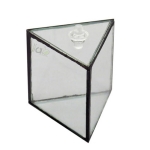
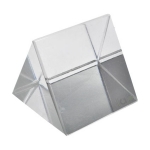
The Educational Kaleidoscope Model produces repeated patterns when light from small coloured objects is reflected between inclined internal surfaces. As the model or object chamber is rotated, the visible arrangement changes while the reflective geometry generates a symmetrical image.
The apparatus supports practical lessons on reflection, symmetry, image multiplication and visual perception. Its exact body material, reflecting-surface material, mirror angle, viewing-tube dimensions and object-chamber construction are not published and should be confirmed before procurement.
Key Features
- Multiple-reflection demonstration: Shows how repeated images form between inclined reflective surfaces.
- Visible symmetry patterns: Produces changing geometrical arrangements that support lessons on rotational symmetry.
- Hands-on operation: Learners can rotate the model and immediately observe changes in the reflected pattern.
- Cross-curricular value: Connects physics with geometry, mathematics, art and visual design.
- No electrical supply required: Uses ambient light or another suitable external light source.
- Reusable teaching model: Supports repeated classroom demonstrations and supervised student activities.
- Compact individual viewing: Allows one learner at a time to examine the internal reflected pattern clearly.
Technical Specifications
|
Specification |
Detail |
|
Product name |
Educational Kaleidoscope Model |
|
Brand |
Lab Equipments Ambala |
|
Product category |
Optical Teaching Model / Light and Optics Apparatus |
|
Viewing capacity |
Single-viewer observation |
|
Scientific principles |
Multiple reflection, image multiplication and rotational symmetry |
|
Body material |
Not published; confirm before ordering |
|
Reflecting-surface material |
Not published; confirm before ordering |
|
Internal mirror arrangement |
Inclined reflective surfaces; exact number and angle not published |
|
Dimensions and weight |
Not published; confirm before ordering |
|
Standards or certifications |
No product-specific certification confirmed |
What's Included in the Kit
- One assembled Educational Kaleidoscope Model
- Viewing aperture or eyepiece integrated into the model
- Internal reflective arrangement; exact construction to be confirmed
- Pattern or object chamber; exact contents to be confirmed
- Instruction sheet or activity guide, when specified in the quotation
Applications and Uses
- Demonstrating repeated images formed by multiple reflections.
- Exploring rotational symmetry and repeating geometrical patterns.
- Comparing the pattern before and after rotating the object chamber.
- Introducing reflection before formal ray-diagram exercises.
- Connecting optics with geometry, art and pattern design.
- Supporting STEM activities, science exhibitions and teacher demonstrations.
Schools can combine this model with the Light and Optics equipment range, broader Physics Laboratory Equipment, curriculum-oriented NCERT science kits and the company’s STEM kits and teaching models.
How to Use the Educational Kaleidoscope Model
- Hold the model securely with the viewing aperture facing the observer.
- Point the opposite end toward a bright, evenly illuminated area.
- Look through the viewing aperture without pressing it against the eye.
- Rotate the tube or pattern chamber slowly.
- Observe how the reflected images combine into repeating symmetrical patterns.
- Compare the number, orientation and symmetry of patterns at different positions.
- Relate the observation to repeated reflection between inclined surfaces.
Safety note: Do not point the kaleidoscope directly at the Sun, lasers or other intense light sources. Stop using the model if any internal reflective component becomes loose or damaged.
Care & Maintenance
- Clean the exterior and viewing aperture with a soft, dry cloth.
- Do not immerse the model or apply liquid cleaner inside the viewing tube.
- Avoid dropping, bending or shaking the apparatus excessively.
- Store it in a dry container protected from dust, pressure and direct heat.
Why Choose Lab Equipments Ambala
Lab Equipments Ambala manufactures scientific instruments, educational models, laboratory experiment setups and teaching kits in Ambala, India. The company has supplied equipment for schools, colleges, universities, training institutes and institutional projects since 1982. Its catalogue covers physics, chemistry, biology, mathematics, engineering and STEM education. Export buyers can request product-specific dimensions, packing details, inspection requirements and customised institutional configurations.
Frequently Asked Questions
What is an Educational Kaleidoscope Model used for?
It is used to demonstrate multiple reflection, image multiplication, rotational symmetry and changing geometrical patterns.
How does a kaleidoscope create symmetrical patterns?
Inclined reflective surfaces repeatedly reflect the same coloured objects or shapes. The repeated images combine into a symmetrical arrangement.
What material is the model made from?
The body and reflecting-surface materials are not published for this exact model. Buyers should request a current technical specification before ordering.
Does the kaleidoscope require batteries?
No. A conventional educational kaleidoscope uses ambient light and does not require electrical power.
Can students use the model independently?
Students can perform basic observations after receiving operating and handling instructions. Younger learners should use it under teacher supervision.
Can the internal patterns be changed?
That depends on the supplied object-chamber design. Confirm whether the chamber is fixed, rotating, refillable or interchangeable.
Request the confirmed construction, dimensions and object-chamber design from Lab Equipments Ambala, or explore the Light and Optics laboratory equipment category for related teaching models.
 (2).png)
 (1).png)
.jpg)
.jpeg)
 (1).png)