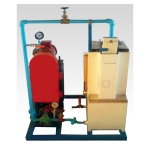
Hydraulic Braking System Model
.jpg)
Product Code : SCL-HML-11340
The hydraulic braking system model is an educational laboratory model used for demonstrating how fluid pressure is transmitted through a hydraulic circuit to operate a brake mechanism. It is designed for schools, colleges, physics laboratories, automobile engineering labs, vocational training institutes, and STEM classrooms.
Product Description
The Hydraulic Braking System Model by Lab Equipments Ambala helps students understand the working principle of hydraulic brakes through direct observation. The model supports teaching of Pascal’s law, pressure transmission, force transfer, brake actuation, master cylinder function, wheel cylinder response, and practical automotive braking concepts.
This model is suitable for teacher-led demonstrations, student practical sessions, automobile engineering training, and applied physics lessons. It gives learners a visible way to study how pedal force or manual input can be transferred through an incompressible fluid to create braking action. Exact construction material, working parts, dimensions, and component list should be confirmed from the final product datasheet before publishing or procurement.
Key Features
- Demonstrates hydraulic braking operation using pressure transmission principles.
- Useful for explaining Pascal’s law, fluid pressure, brake force, and mechanical advantage.
- Suitable for physics labs, automobile engineering labs, polytechnic institutes, and STEM classrooms.
- Helps students observe the relationship between input force, hydraulic pressure, and braking response.
- Supports hands-on learning of master cylinder, brake line, and brake mechanism concepts.
- Designed for supervised classroom demonstration and technical training use.
- Encourages practical understanding of real vehicle braking systems without using a full vehicle setup.
Technical Specifications
|
Specification |
Detail |
|
Product name |
Hydraulic Braking System Model |
|
Brand |
Lab Equipments Ambala |
|
Product category |
Automobile Engineering Model / Physics Demonstration Model / Fluid Mechanics Teaching Aid |
|
Primary keyword |
hydraulic braking system model |
|
Secondary keywords |
hydraulic brake model, Pascal’s law model, automobile braking system model, brake system teaching aid, fluid pressure demonstration model, automotive lab equipment, engineering training model, physics lab model |
|
Intended users |
Schools, colleges, engineering institutes, automobile training centers, polytechnic labs, STEM labs, and science teachers |
|
Demonstration capacity |
Classroom and laboratory demonstration capacity; operating range to be confirmed |
What's Included in the Kit
- Hydraulic braking system model main assembly
- Brake pedal or manual operating lever
- Master cylinder assembly
- Hydraulic tubing or brake line
- Wheel cylinder, caliper, or brake actuation unit
- Brake drum, brake shoe, brake disc, or equivalent demonstration mechanism
- Mounting base or display frame
- User manual or experiment guide
Applications / Uses
- Teaching Pascal’s law and hydraulic pressure transmission in physics laboratories.
- Demonstrating the working principle of hydraulic brakes in automobile engineering labs.
- Explaining how brake pedal force is transferred through fluid to a brake mechanism.
- Supporting vocational training on basic vehicle braking systems.
- Comparing hydraulic force transfer with mechanical linkage systems.
- Using as a visual teaching aid for classroom lectures, workshops, and practical demonstrations.
How to Use the Hydraulic Braking System Model
- Place the hydraulic braking system model on a stable demonstration table or lab bench.
- Check that the model is clean, secure, and free from visible leakage or loose parts.
- Identify the pedal or operating lever, master cylinder, hydraulic line, and brake mechanism.
- Apply gentle pressure to the pedal or lever as instructed by the teacher or manual.
- Observe how the input force is transmitted through the hydraulic line.
- Watch the brake actuation point and note how the brake mechanism responds.
- Discuss how Pascal’s law explains pressure transfer in the closed hydraulic circuit.
Use the model only under instructor supervision. Do not apply excessive force, open sealed hydraulic parts, ingest or touch any hydraulic fluid unnecessarily, or operate the model if leakage is visible.
Care & Maintenance
- Wipe the model with a clean, dry cloth after classroom use.
- Store the model in a dry area to protect metal parts, tubing, and display components.
- Inspect the hydraulic line, joints, cylinder area, and moving parts before every demonstration.
- Do not force the pedal, bend tubing, or dismantle hydraulic components unless the manual permits it.
Why Choose Lab Equipments Ambala
Lab Equipments Ambala manufactures and supplies scientific laboratory instruments, educational lab equipment, didactic models, science kits, mathematics kits, and STEM learning products. The company serves schools, colleges, laboratories, technical institutes, and export buyers from Ambala, India. Its catalogue includes physics lab equipment, electrical and electronics products, laboratory instruments, NCERT kits, and educational science models. Buyers should request the final datasheet, component list, warranty terms, and compliance documents before bulk orders, tenders, or institutional procurement.
Explore related categories such as educational laboratory equipment, physics lab equipment, electrical and electronics lab equipment, and hydraulic press model.
Frequently Asked Questions
What is a hydraulic braking system model used for?
A hydraulic braking system model is used to demonstrate how fluid pressure transfers force from an input pedal or lever to a brake mechanism. It is used in physics, automobile engineering, and vocational training laboratories.
How does a hydraulic braking system model work?
The model works by showing how pressure applied at one point in a hydraulic circuit is transmitted through fluid to another point. This helps students understand Pascal’s law and brake actuation.
Is this model suitable for automobile engineering students?
Yes, the Hydraulic Braking System Model is suitable for automobile engineering, mechanical engineering, polytechnic, and technical training programs. It helps learners study brake system operation without needing a complete vehicle.
Can the model be used in school physics labs?
Yes, it can be used in school physics laboratories when the lesson covers pressure, fluids, force transmission, or Pascal’s law. Use should be supervised by a teacher or lab instructor.
What components are included with the hydraulic brake model?
The exact component list must be confirmed from Lab Equipments Ambala. A typical review should verify the pedal or lever, master cylinder, hydraulic tubing, brake mechanism, base, and manual before publishing final specifications.
Does the hydraulic braking system model need special maintenance?
The model should be kept clean, dry, and inspected before use. Any visible leakage, loose connection, or damaged moving part should be checked before classroom demonstration.
For more practical models for physics and engineering education, visit the physics lab equipment category by Lab Equipments Ambala.
Suggested image ALT text: Hydraulic braking system model for Pascal’s law and automobile brake demonstration by Lab Equipments Ambala.
.jpg)