
Converging Optical Lens
.png)
Product Code : SCL-LAO-11295
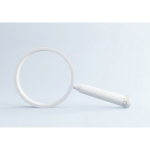
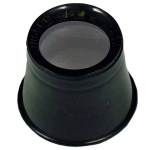
The Converging Optical Lens is a positive optical element used to bring parallel light rays toward a principal focus. It supports educational experiments involving focal length, image formation, magnification, ray tracing and the relationship between object distance and image distance.
Product Description
A converging lens is generally thicker near its optical centre than at its edges. When parallel rays pass through the lens, refraction redirects them toward a focal point on the opposite side. Depending on object position, the lens can produce real or virtual images with different sizes and orientations.
The lens can be mounted in a compatible holder, optical bench or ray-tracing setup. Its exact profile—such as double convex, plano-convex or positive meniscus—must be confirmed. Diameter, focal length, material, optical power and manufacturing tolerances are also product-specific procurement details.
Key Features
- Converging lens action: Redirects parallel incident rays toward a principal focus.
- Positive focal length: Supports calculations involving focal distance and positive optical power.
- Image-formation experiments: Produces real or virtual images depending on the object position.
- Ray-tracing compatibility: Can be used with ray boxes, classroom light sources or suitable laser-ray apparatus.
- Optical-bench use: Fits a compatible lens holder for measured object and image distances.
- Reusable teaching element: Suitable for repeated supervised school and college practicals.
- No power requirement: The lens itself requires no electrical supply.
Technical Specifications
|
Specification |
Detail |
|
Product name |
Converging Optical Lens |
|
Brand |
Lab Equipments Ambala |
|
Product category |
Positive Lens / Educational Optics Component |
|
Optical action |
Converging |
|
Lens profile |
Convex; exact double-convex, plano-convex or meniscus form |
|
Focal-length sign |
Positive under the standard Cartesian sign convention |
What's Included
- One Converging Optical Lens
- Protective storage wrapping or case
- Lens holder or mounting frame
- Focal-length identification label
- Experiment and care instructions
Applications
- Determining the focal length of a convex lens.
- Verifying the thin-lens relationship.
- Studying real, inverted and magnified images.
- Observing virtual, upright images with the object inside the focal length.
- Tracing principal rays and locating optical centres.
- Comparing converging and diverging lens behaviour.
Related apparatus includes the Acrylic Lens and Prism set, the Ray Optics Kit, the complete Light and Optics range and broader Physics Laboratory Equipment.
How to Use the Converging Optical Lens
- Inspect and clean both optical surfaces before use.
- Secure the lens in a compatible holder without applying excessive pressure.
- Align the lens centre with the object, light source and optical axis.
- Place a screen on the opposite side of the lens.
- Move the lens or screen until a sharp real image is obtained.
- Record the object and image distances from the optical centre.
- Repeat the experiment at different object positions.
- Compare the observations with the expected ray diagram and lens calculation.
Safety note: Never use the lens to focus sunlight onto skin, eyes or combustible material. Handle the lens by its edge and do not use chipped or cracked elements.
Care & Maintenance
- Clean the lens with a soft, lint-free optical cloth.
- Avoid touching the optical faces with bare fingers.
- Do not use abrasive cleaners or overtighten the holder.
- Store the lens separately in padded, dry packaging.
Why Choose Lab Equipments Ambala
Lab Equipments Ambala manufactures and supplies physics apparatus, educational optics components and laboratory experiment kits from Ambala, India. Its published range includes convex and concave lenses, prisms, optical benches, ray-optics kits and related holders. The equipment is intended for schools, colleges and institutional laboratories. Buyers should request the confirmed lens profile, focal length, diameter and material specification before ordering.
Frequently Asked Questions
What is a Converging Optical Lens used for?
It is used to converge light rays and study focal length, image formation, magnification and lens equations.
Is a converging lens the same as a convex lens?
In standard educational optics, a convex lens in air normally acts as a converging lens. The exact surface profile may vary.
What images can it form?
It can form real, inverted images when the object is outside the focal length and virtual, upright images when the object is inside it.
What is the focal length of this lens?
The focal length is not published for this exact element. Confirm its nominal value and permitted tolerance before ordering.
Is the lens glass or acrylic?
The material is not confirmed. It should be identified explicitly as optical glass, acrylic or another transparent material.
Can it be mounted on an optical bench?
Yes, provided its diameter and mounting arrangement match the intended lens holder or carrier.
Request the confirmed diameter, focal length, profile and optical material, or explore the Light and Optics equipment category for related educational lenses.
 (1).png)
.jpg)
.png)
 (2).png)

